Guides › HVAC help
AC running but blowing warm air? Learn the common causes, the safe checks you can do yourself, and when to call a licensed HVAC pro.
Few things are more frustrating on a hot afternoon than hearing the air conditioner running while warm air drifts out of the vents. The good news is that some causes are simple to fix yourself. The less good news is that others involve refrigerant or electrical parts that need a licensed technician. This guide walks through both, in the order a technician would usually think about them.
It sounds obvious, but it's the most common cause. Make sure the thermostat is set to Cool, not Heat, Auto or Fan Only, and that the set temperature is below the current room temperature. If the fan is set to On instead of Auto, the blower keeps running even when the system isn't cooling, which feels like warm air between cycles. Battery-powered thermostats can also act strangely when batteries are low.
A clogged filter chokes airflow across the indoor coil. Less airflow means less cooling at the vents, and over time it can cause the coil to freeze (see our frozen coil guide). Pull the filter and hold it up to a light. If you can't see light through it, replace it.
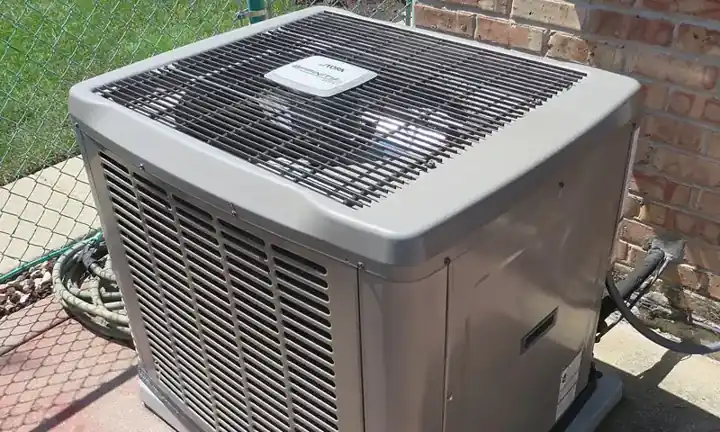
Go outside while the system is calling for cooling. You should hear the compressor hum and see the top fan spinning. If the indoor blower runs but the outdoor unit is silent, the system is just moving room air around. Check the breaker panel for a tripped breaker labeled AC, condenser or similar, and check that the outdoor disconnect switch (usually a gray box on the wall near the unit) is on. If a breaker has tripped, you can reset it once. If it trips again, leave it off and call a professional; repeated tripping signals an electrical or compressor problem.
The outdoor coil releases heat removed from your home. If it is matted with dirt, grass clippings, pollen or cottonwood fluff, or crowded by shrubs, it can't do that well and cooling drops off. With power turned off at the disconnect, you can gently rinse the coil from the outside using a garden hose. Avoid pressure washers, which bend the delicate fins.
Many systems have a safety switch that shuts off cooling when the drain line backs up, to prevent water damage. In humid Southern climates, algae in the drain line is very common. If you see water in the drain pan or around the air handler, that may be the reason. Some homeowners can clear a drain line with a wet/dry vacuum at the outdoor end; if you're unsure, call a pro.
The capacitor gives the compressor and fan motor the electrical kick they need to start. It's one of the most common parts to fail, especially after heat waves and power surges. A classic symptom is an outdoor unit that hums but the fan doesn't spin. Capacitors store a dangerous charge even with power off, so this is not a DIY repair.
Air conditioners don't "use up" refrigerant. If it's low, there's a leak. Signs include weak cooling, ice on the copper lines, and a hissing or bubbling sound. Handling refrigerant legally requires EPA certification, and simply topping it off without finding the leak usually means paying for the same problem again later. A technician can test for the leak and discuss repair versus replacement.
The compressor is the heart of the system. If it has failed or is overheating, the unit may run without cooling or shut off quickly. Diagnosis requires electrical testing by a trained technician. On an older system, a compressor failure often leads to the repair-or-replace conversation.
If you've checked the thermostat, filter, breaker and outdoor unit and the air is still warm, it's time for a professional diagnosis. Note what you observed (outdoor fan spinning or not, humming, ice, water, breaker tripping); it helps the technician and can shorten the visit. If anyone in the home is elderly, very young or medically vulnerable, treat loss of cooling in extreme heat as urgent.
Some HVAC checks are safe for any homeowner: the thermostat, the air filter, a single breaker reset, and keeping the outdoor unit clear. Others are not. Leave refrigerant, capacitors, wiring inside the unit, and anything involving gas to a licensed professional. If you ever smell gas or see smoke or sparks, leave the home and call 911 or your gas utility from a safe place.
Southern AC Repair is a free referral service. Choose your city to call a local, independent licensed HVAC contractor, or send a request.
Sebring, FLWichita Falls, TXDothan, ALLake Charles, LAOcala, FLThis article is general information, not professional advice or a diagnosis. Always consult a licensed HVAC contractor about your specific system.
